

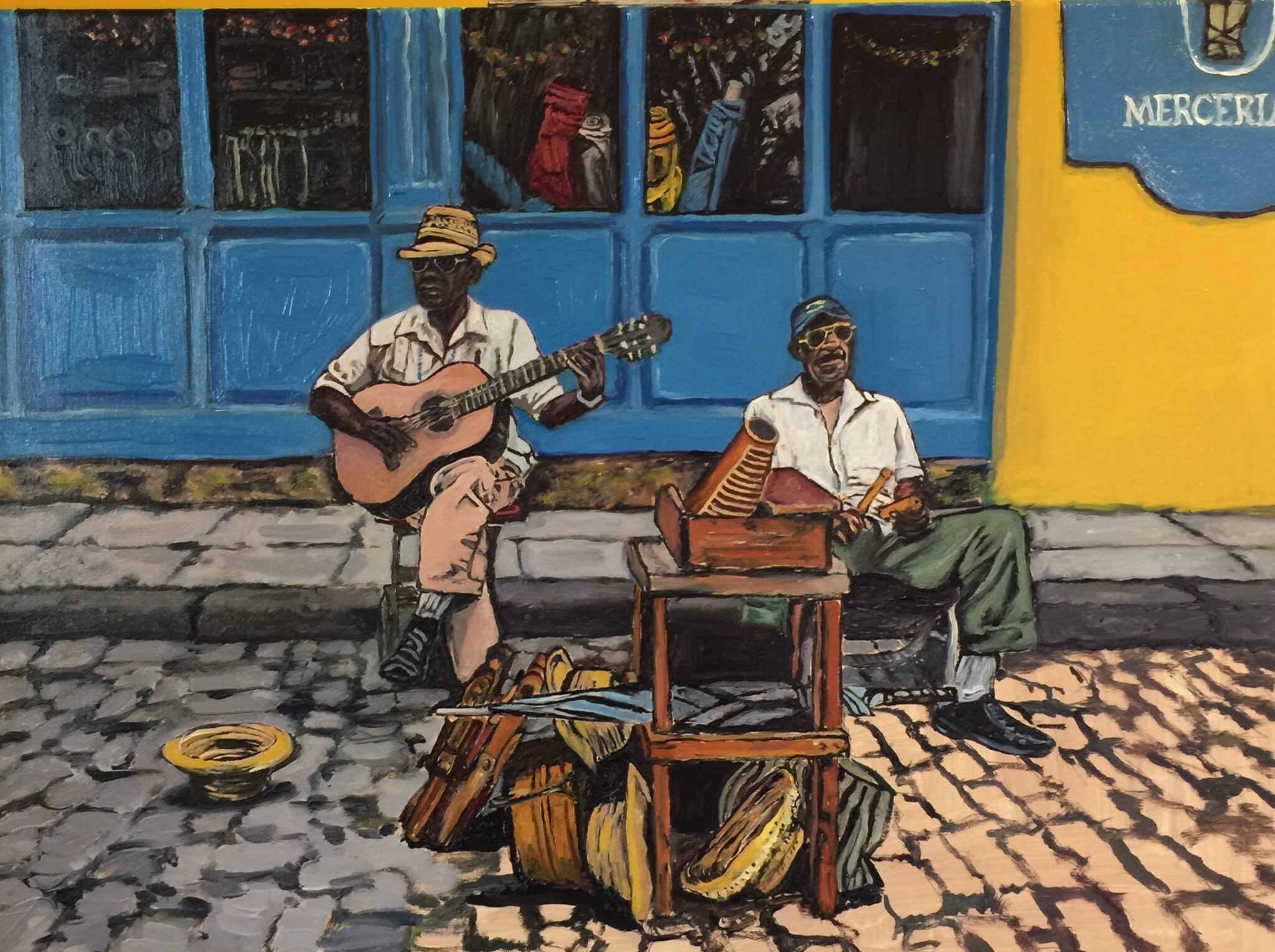
One of the key characteristics that sets Cuban music apart from many other types of music is the unique relationship between the fundamental elements of music: rhythm, melody, and harmony. All three elements play an equal role in how the music sounds and each is highly developed.
As we’ve seen, the syncopated rhythms are quite challenging to master. The harmonic content can be equally sophisticated and the way in which it is played — using arpeggios for a melodic effect— is also challenging.
The melodic manifestation of harmony in Cuban music, when played with the various syncopations, is known as gaujeo or montuno. These two words have somewhat similar meanings, but in general, guajeo is played by a string instrument and montuno by the piano. Although they are often interchangeable, we will use the term guajeo in this book. It is the repeated melodic phrase or vamp that outlines the harmony.
Melodically and harmonically speaking, the music of Cuba is based on triads and 7th chords. Since 7th chords are in essence a combination of two triads, realising how to play the triads in a melodic fashion over the complete fretboard is an essential skill to playing the guajeos that make up the bulk of the repertoire for the guitar and tres in Cuban music.
This course will get you familiar with all of the triadic possibilities – both major and minor – as well as the dominant 7th chord possibilities across the entire fretboard.
Course Content

Course Includes
- 3 Lessons
- 12 Exercises
